Count the actual uses
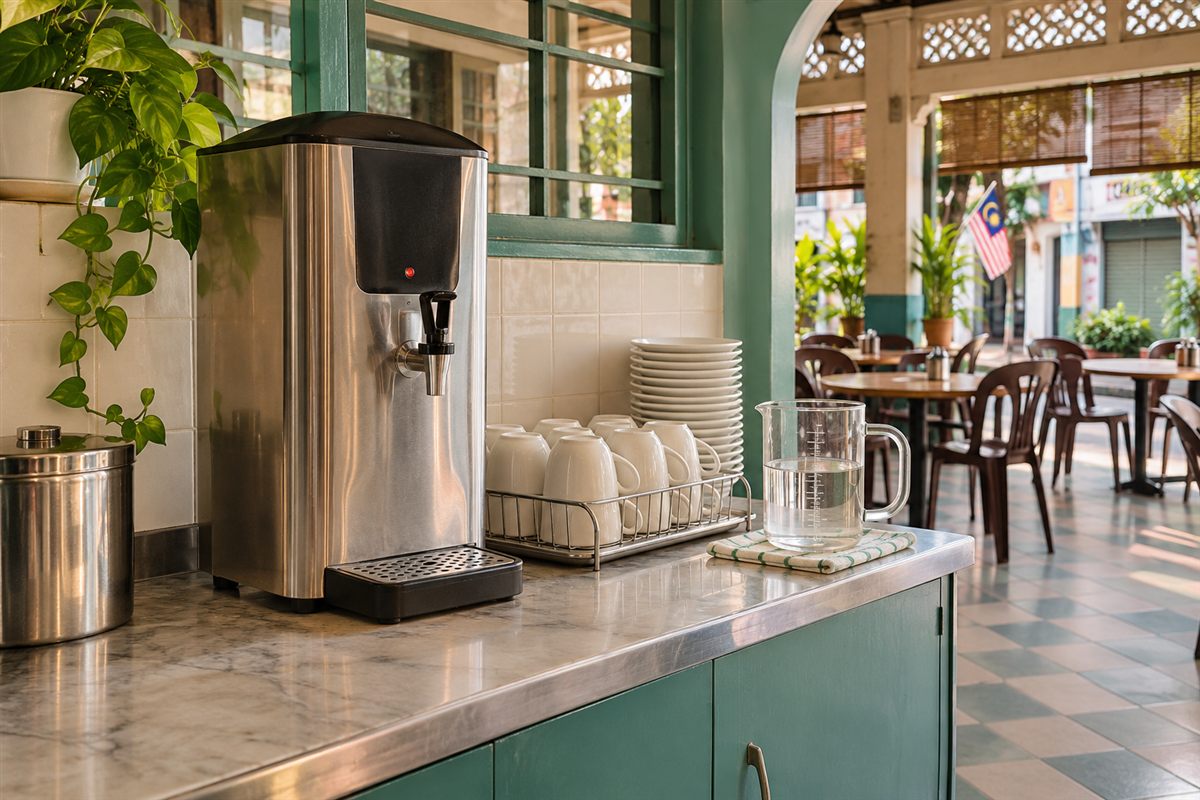
List tea, drink preparation and other approved uses of the dispenser separately. Record the water volume per serving and the timing of batches.
Do not include water supplied by a different appliance unless both will genuinely share this unit. Check which uses require a particular outlet temperature and how temperature will be verified.
Worked morning-rush estimate
Hypothetical example: 40 servings each require 0.25 L of hot water within 20 minutes. Demand is 40 × 0.25 = 10 L.
Assume the unit starts with 4 L of usable hot water and has verified recovery of 12 L/hour at the relevant inlet and outlet temperatures. A simplified supply estimate is 4 + 12 × 20/60 = 8 L, leaving a 2 L shortfall.
This assumes even recovery; early bursts can still exhaust the reserve sooner.
Validate output at the counter
Request a timed draw-down test at the temperature needed for the task. Measure serving time, staff movements and the refill queue as well as litres delivered.
Compare a larger usable reserve, higher verified recovery or a revised preparation schedule. Electrical load and installation suitability must be checked before selecting a higher-output unit.
Put it into practice
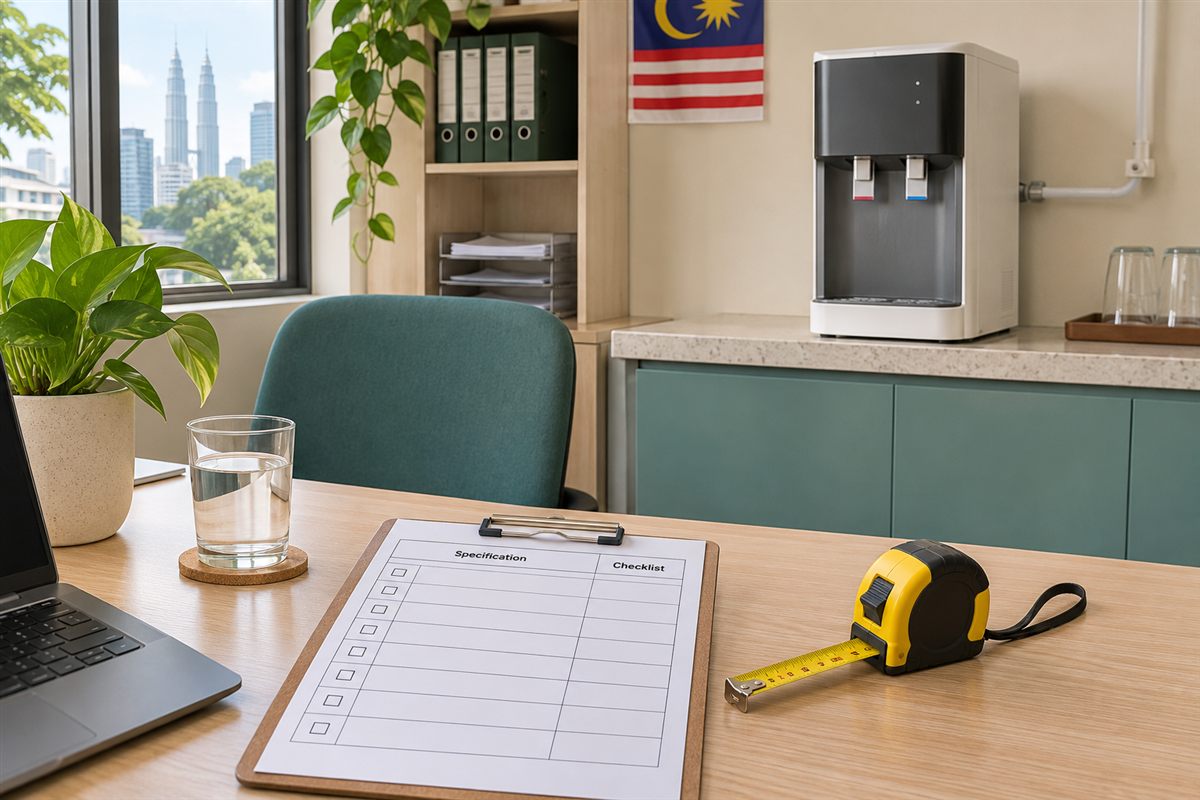
Your planning worksheet
A demand estimate using clearly labelled serving assumptions.
| Demand input | Hypothetical value / site entry |
|---|---|
| Serving size | 0.25 L; replace with actual recipe requirement |
| Peak count and duration | 40 servings in 20 minutes; observe on site |
| Demand | 10 L total; note the busiest first five minutes |
| Output evidence | Usable hot reserve, recovery rate and test temperatures |
Sources & context
- US CDC — About Choosing Home Water Filters
Supports matching treatment to the water supply and specific contaminants. Dispensing calculations and worksheets are GAGE planning examples, not CDC recommendations.
Sources checked 9 November 2026. Worksheets are editorial planning tools. Confirm site-specific requirements, current local guidance and the instructions for the equipment you use.