List outlets that share the filter
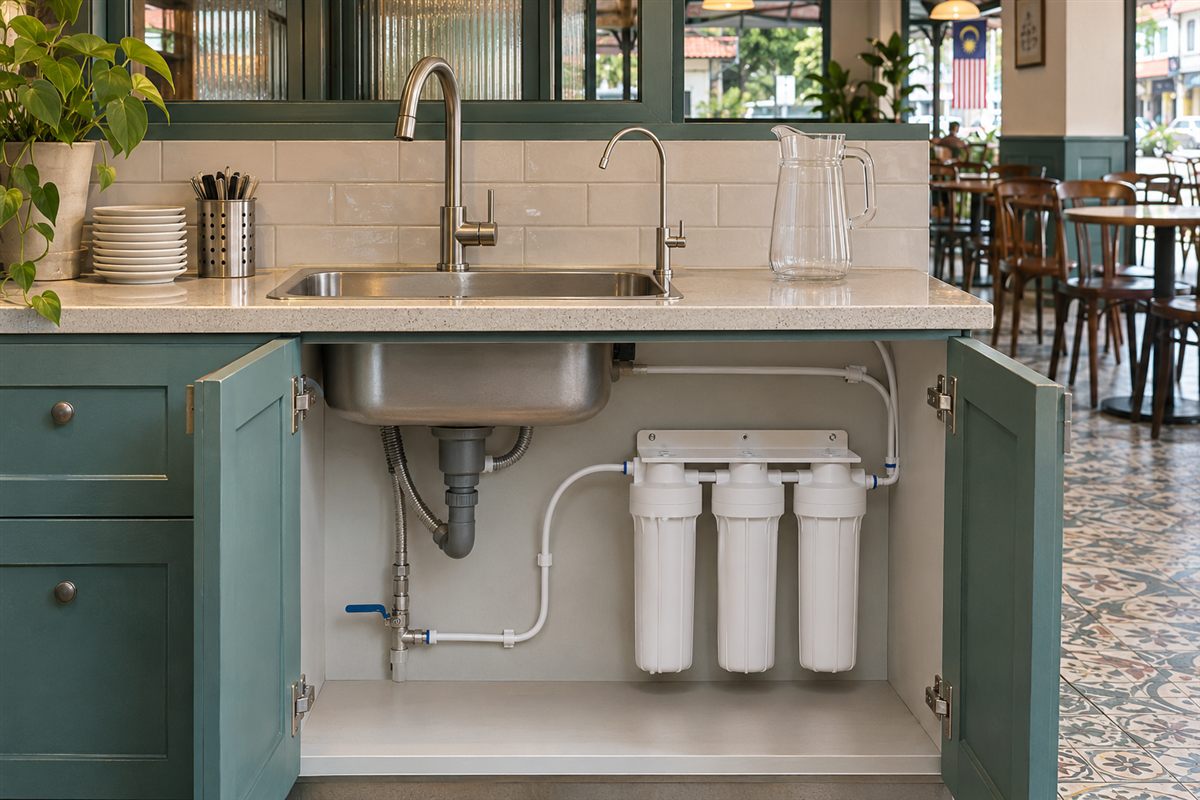
Sketch every connected outlet and identify which can run together. Record the flow each task needs and whether a slower fill would delay service.
Distinguish the filter’s flow restriction from limitations in pipework, valves or connected equipment. Ask the installer to check compatibility rather than adding connections informally.
Use a peak-flow scenario
Hypothetical example: one jug-filling tap needs 2 L/min while another approved outlet requires 1.5 L/min. The simultaneous demand is 3.5 L/min.
This is a planning load, not a claim that any particular filter can deliver it. Ask for rated flow and pressure-drop information at the relevant inlet pressure and consider how performance changes through the service life.
Keep treatment and flow as separate acceptance checks
A fast filter is not necessarily suitable for the substances you need to address. Record the supply conditions and the specific reduction claims separately from flow.
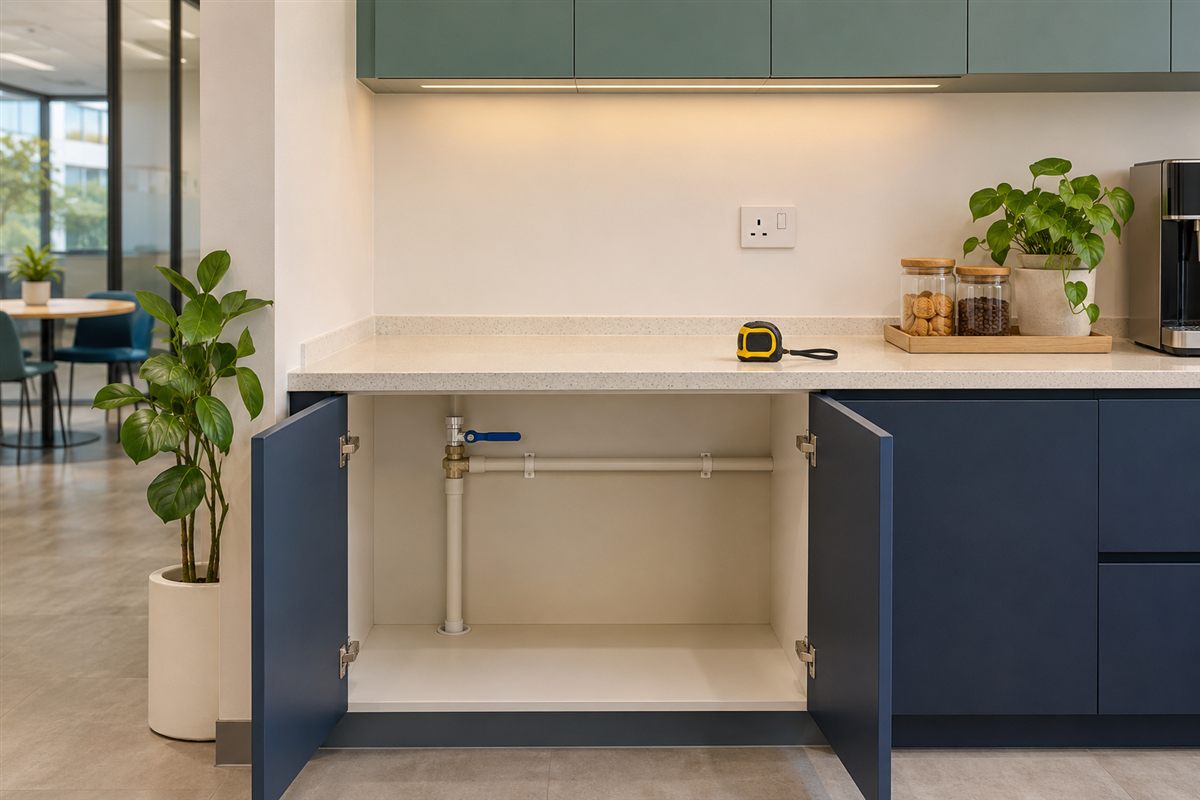
Leave space to isolate the supply, remove the housing and handle spills during cartridge work. If a filter cannot meet both the treatment need and the demand, revise the arrangement rather than bypassing it during busy periods.
Put it into practice
Your planning worksheet
A simultaneous-use checklist and supplier questions.
| Simultaneous-use check | Supplier question |
|---|---|
| Connected outlets | Which connections are supported by the equipment? |
| Peak demand, L/min | What flow is available under our supply conditions? |
| Pressure loss | What inlet pressure range and pressure drop apply? |
| Service access | Can the cartridge be changed without dismantling the counter? |
| Treatment evidence | Which specific reduction claims apply at the rated flow? |
Sources & context
- US CDC — About Choosing Home Water Filters
Supports matching treatment to the water supply and specific contaminants. Dispensing calculations and worksheets are GAGE planning examples, not CDC recommendations.
Sources checked 9 November 2026. Worksheets are editorial planning tools. Confirm site-specific requirements, current local guidance and the instructions for the equipment you use.