Build the schedule from shift demand
List station locations, user groups, peak breaks and planned service tasks. Ask the technician for expected downtime, commissioning requirements and a contingency if work takes longer.
Do not schedule all units serving the same workers together merely because they have the same filter due date.
Use a rotation with a hold point
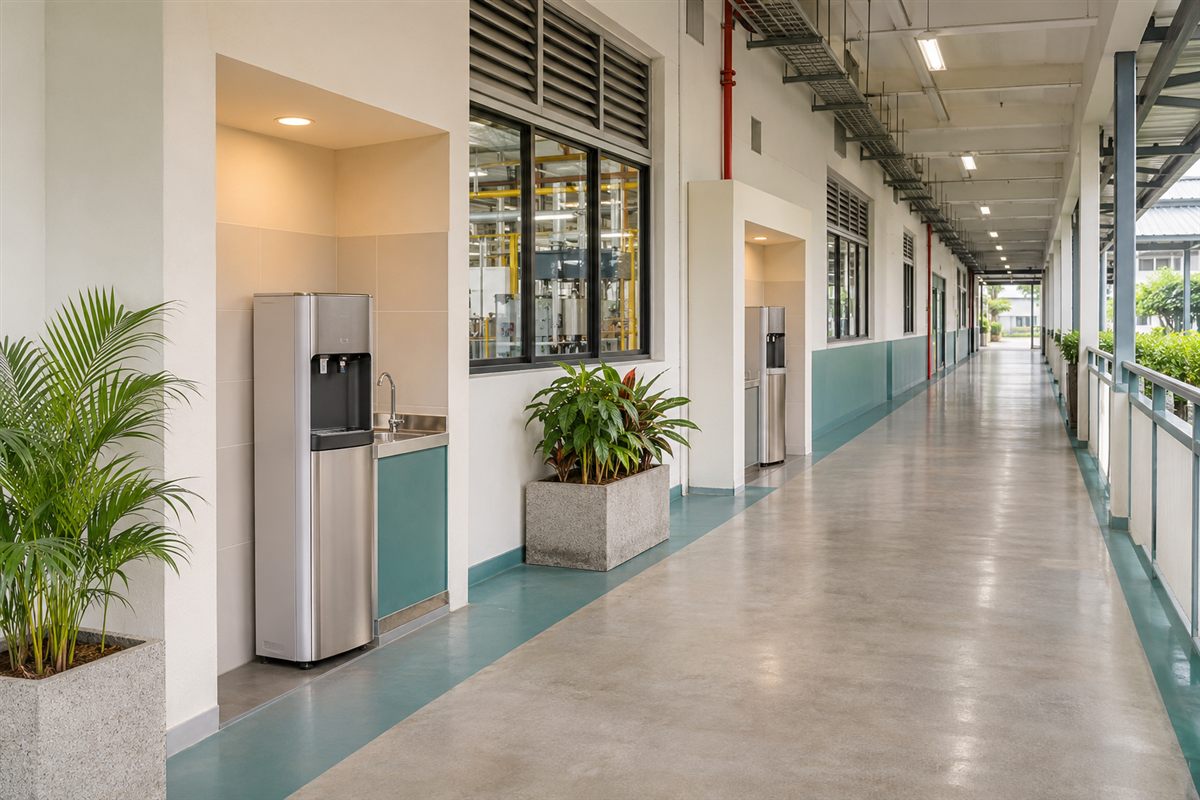
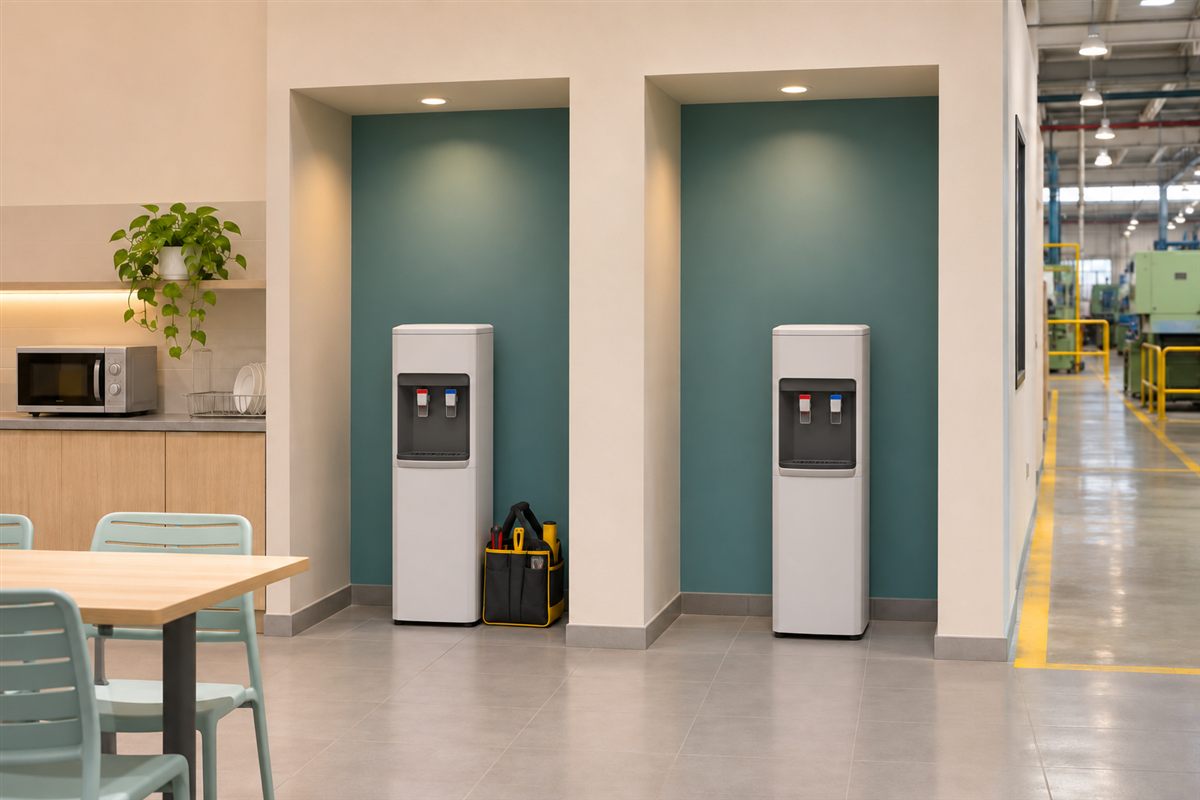
Hypothetical example: stations A and B serve a daytime area and station C serves a night-shift rest area. Service A after the morning break while B remains available; release A after the prescribed checks before isolating B.
Service C only after arranging accessible alternative drinking water for the night shift. Times should be set from the real shift plan, not copied from this sequence.
Verify restoration before moving on
Record the cleaning, filter replacement, flushing and functional checks specified for the equipment. Check for leaks and confirm the station is ready for use under the site procedure.
If a unit fails, stop the rotation and keep the alternative in place. Never count an isolated or unfinished station as available capacity.
Put it into practice
Your planning worksheet
A service rotation example that keeps alternative drinking-water access available.
| Service stage | Access and release condition |
|---|---|
| Station A isolated | B open, accessible and checked for expected demand |
| Station A returned | Required commissioning and records completed |
| Station B isolated | A confirmed available; directions updated |
| Station C service | Night-shift alternative agreed before work starts |
| Overrun or fault | Hold further isolation; notify shift supervisor |
Sources & context
- US CDC — About Choosing Home Water Filters
Supports matching treatment to the water supply and specific contaminants. Dispensing calculations and worksheets are GAGE planning examples, not CDC recommendations.
Sources checked 9 November 2026. Worksheets are editorial planning tools. Confirm site-specific requirements, current local guidance and the instructions for the equipment you use.