Map routes by shift
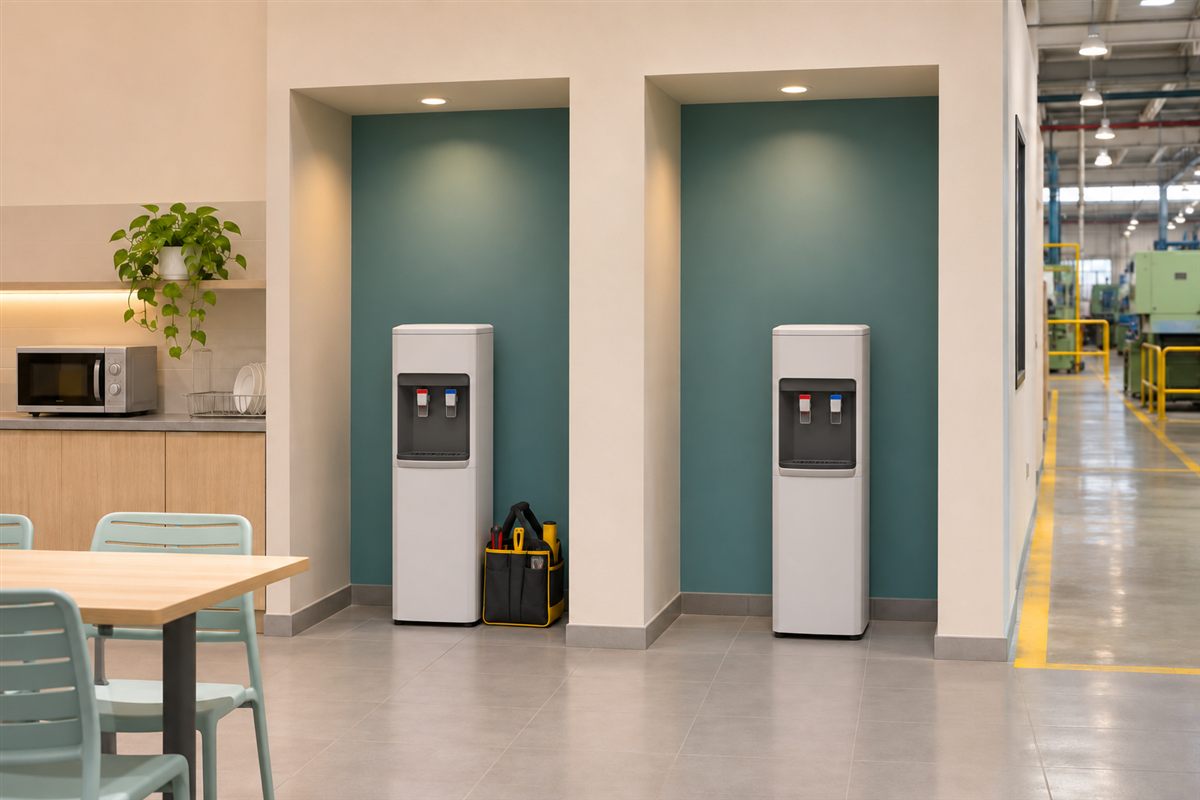
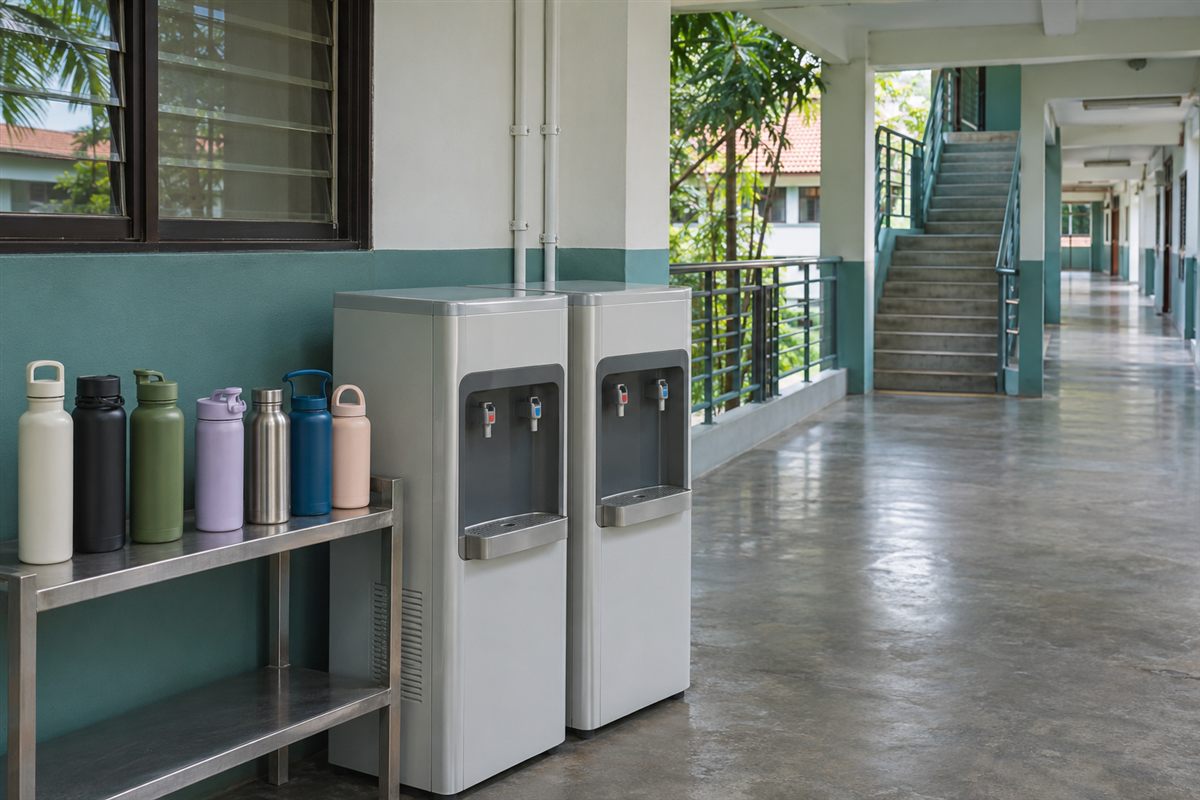
Walk from each work area to the proposed station during a normal break. Include footwear, access controls and any required changing route.
Keep drinking-water use in appropriate areas and avoid creating a shortcut across vehicle movements. Record routes for night-shift workers as well as daytime staff.
Estimate the busiest refill window
Hypothetical example: 60 workers each refill 0.75 L over a 15-minute break, giving 45 L total demand. If two equally used stations share the demand, each would handle 22.5 L.
Equal sharing is only an assumption: a station closer to an exit may carry most of the load. Observe queues and adjust the allocation.
Distinguish total drinking water from the portion required cold.
Provide access when one unit is unavailable
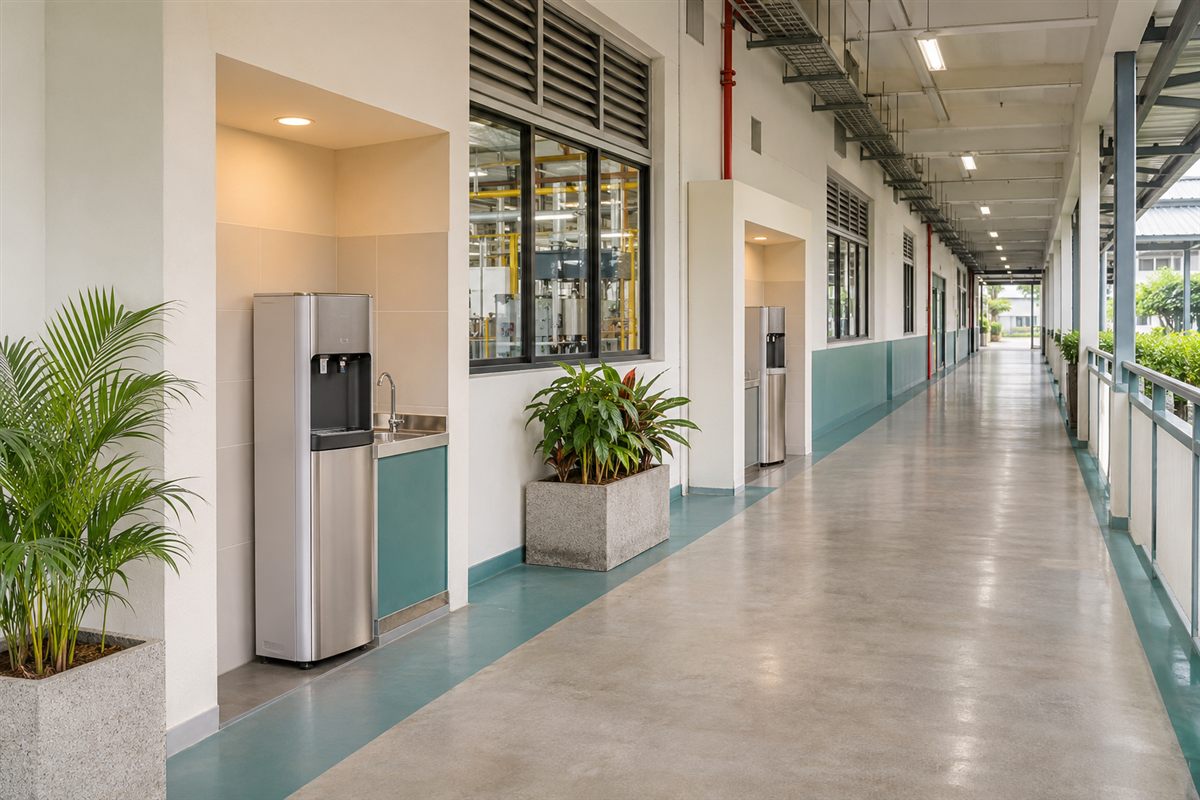
Identify an alternative that is reachable on every relevant shift and has enough capacity. Agree who posts temporary directions and who checks the station before a shift starts.
Cleaning access, spill response and filter servicing should fit the work pattern. A station behind a locked office door is not a usable night-shift alternative.
Put it into practice
Your planning worksheet
A shift-break and walking-route planning example.
| Route-planning field | Record |
|---|---|
| Shift and origin | Work area, worker count and break times |
| Walking route | Safe route, doors and access restrictions |
| Peak refill load | Bottle sizes, number of users and cold-water share |
| Station allocation | Observed use at each location |
| Alternative access | Available station and responsible shift contact |
Sources & context
- US CDC — About Choosing Home Water Filters
Supports matching treatment to the water supply and specific contaminants. Dispensing calculations and worksheets are GAGE planning examples, not CDC recommendations.
Sources checked 9 November 2026. Worksheets are editorial planning tools. Confirm site-specific requirements, current local guidance and the instructions for the equipment you use.