Create a shared room brief
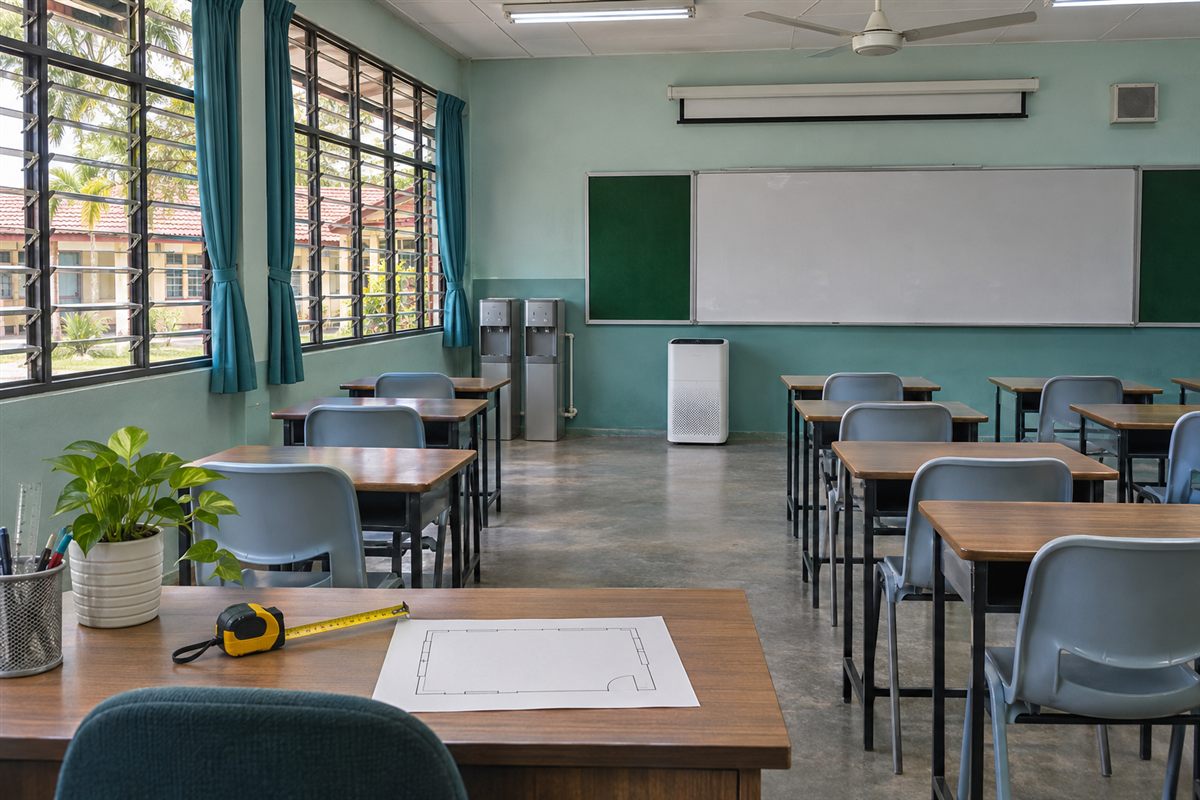
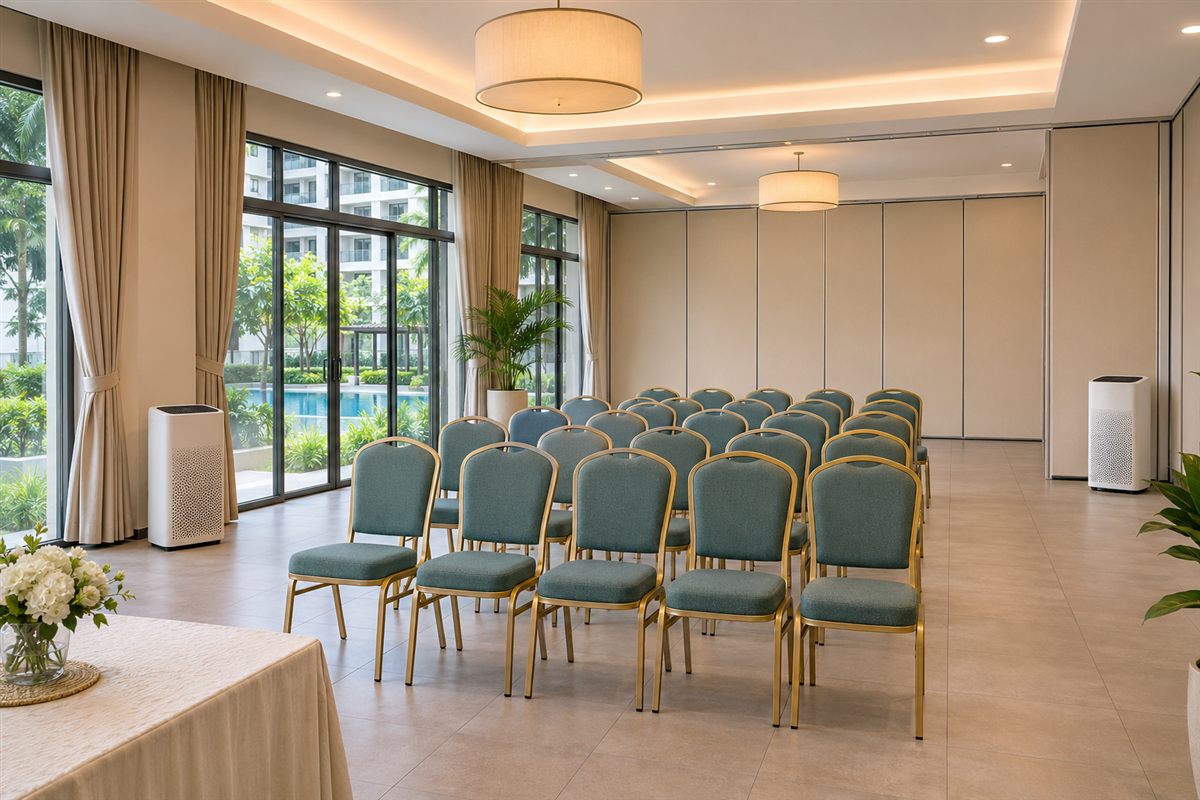
Record dimensions, ceiling height, normal seating layouts and whether the room can be divided. Describe typical attendance and event duration.
Mark doors, stage or speaking position, sockets and storage areas. Assess each partitioned configuration separately rather than assuming one arrangement covers every booking.
Compare delivery and sound together
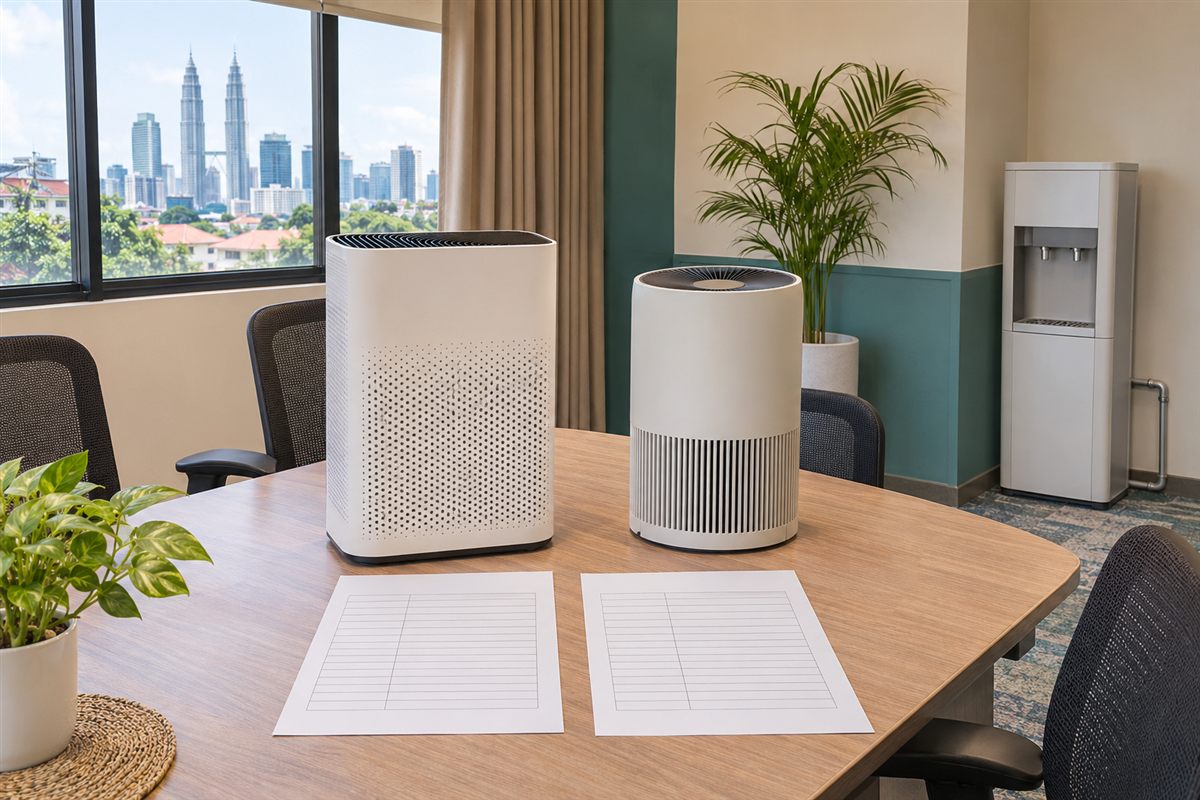
Choose and state the airflow assumption used for the comparison. For a hypothetical 150 m³ enclosed room at four purifier-equivalent air changes per hour, the combined clean air delivery rate (CADR) assumption is 600 m³/h.
Ask for evidence at the event setting and confirm that the proposed locations keep intakes and outlets clear. Check sound during announcements and quiet functions.
Include the management workload
Record filter quantities, replacement criteria, servicing access and recurring costs over the same comparison period. Clarify who moves and checks units before an event.
Portable equipment should not be routinely pushed behind curtains or stored in a way that damages filters. Require a handover demonstration in the agreed furnished layout.
Put it into practice
Your planning worksheet
A quotation worksheet based on room layout and event operation.
| Quotation worksheet | Required response |
|---|---|
| Layout and volume | Room configuration and m³ used |
| Air delivery | CADR per unit and total at stated event speed |
| Noise evidence | Same setting, quantity and test conditions |
| Operation | Location, cable routes and pre-event check |
| Cost and acceptance | Common-period total, filters and demonstration criteria |
Sources & context
- US EPA — Guide to Air Cleaners in the Home, second edition
Supports the distinctions between particle CADR, gas filtration, operating speed and clear airflow. Residential technical principles are used here for operational planning, not as workplace or clinical compliance criteria.
- US CDC / NIOSH — How Much Ventilation Is Enough?
Explains air changes and equivalent clean-air delivery. GAGE’s four-change examples are arithmetic illustrations, not this source’s recommended target; CDC discusses aiming for five or more total clean-air changes where possible in its stated context.
Sources checked 9 November 2026. Worksheets are editorial planning tools. Confirm site-specific requirements, current local guidance and the instructions for the equipment you use.