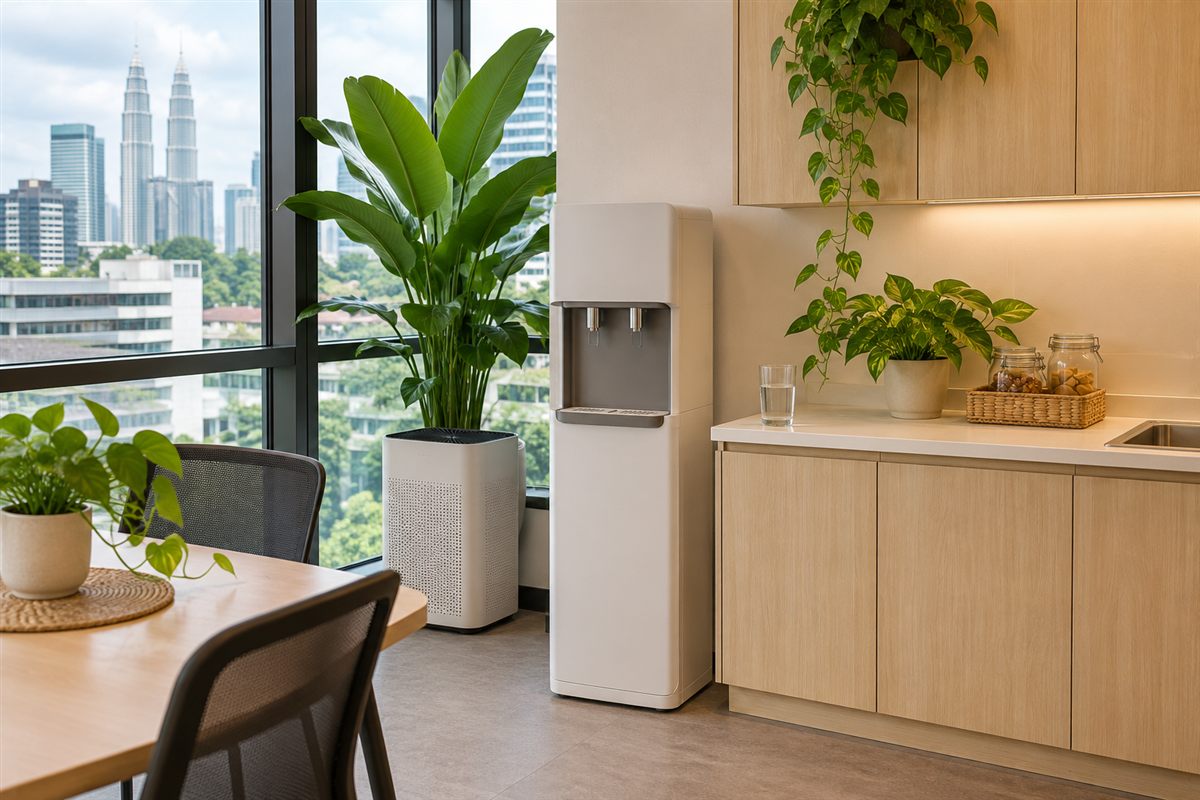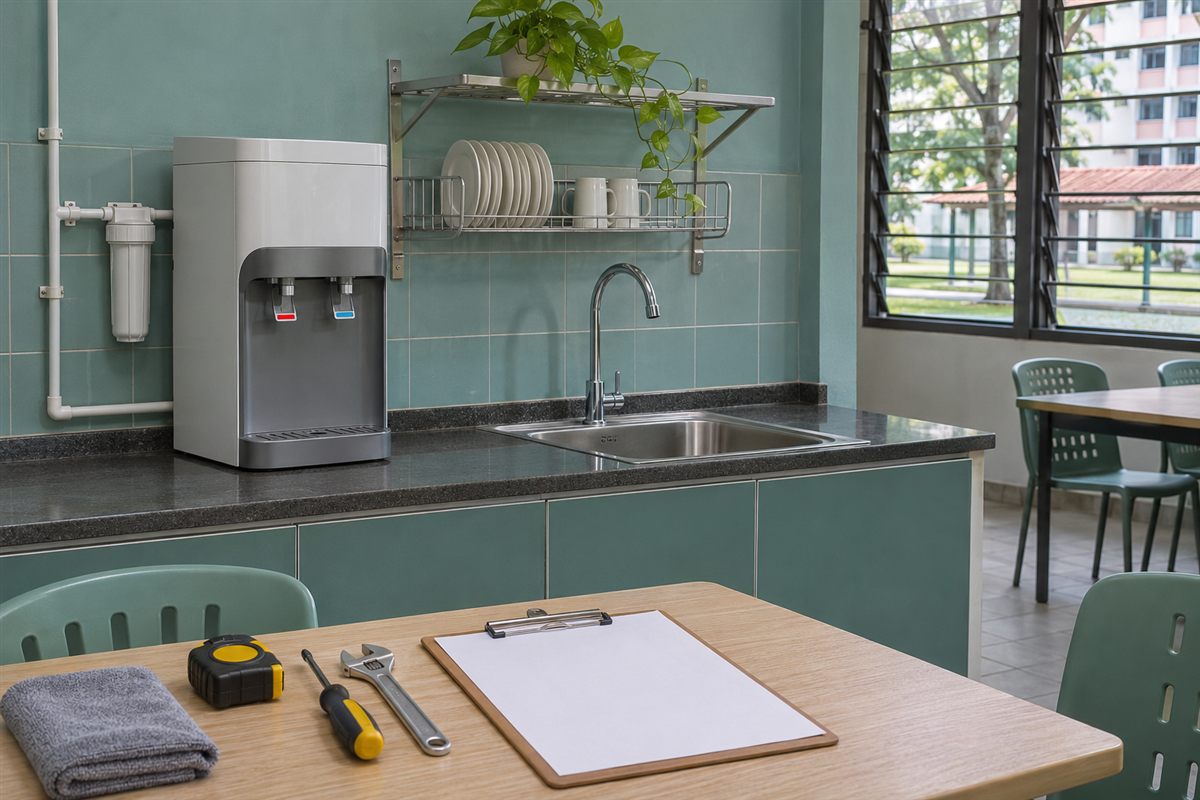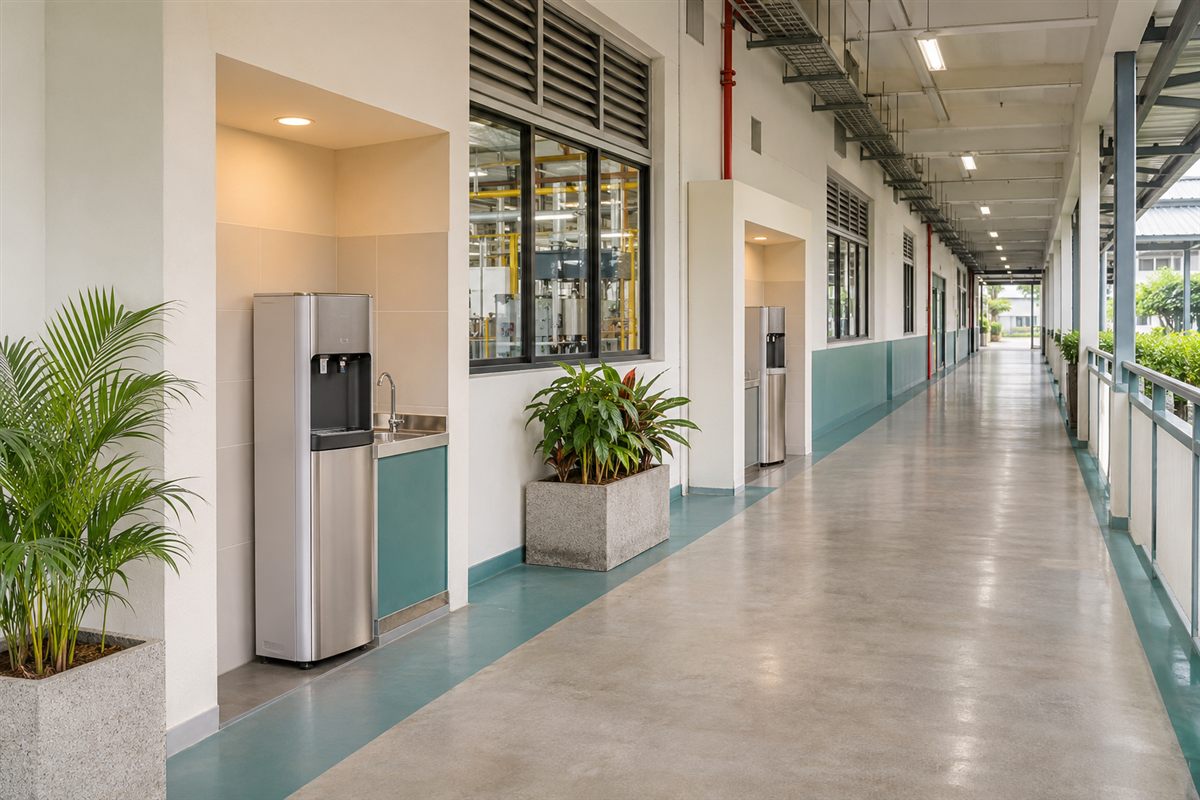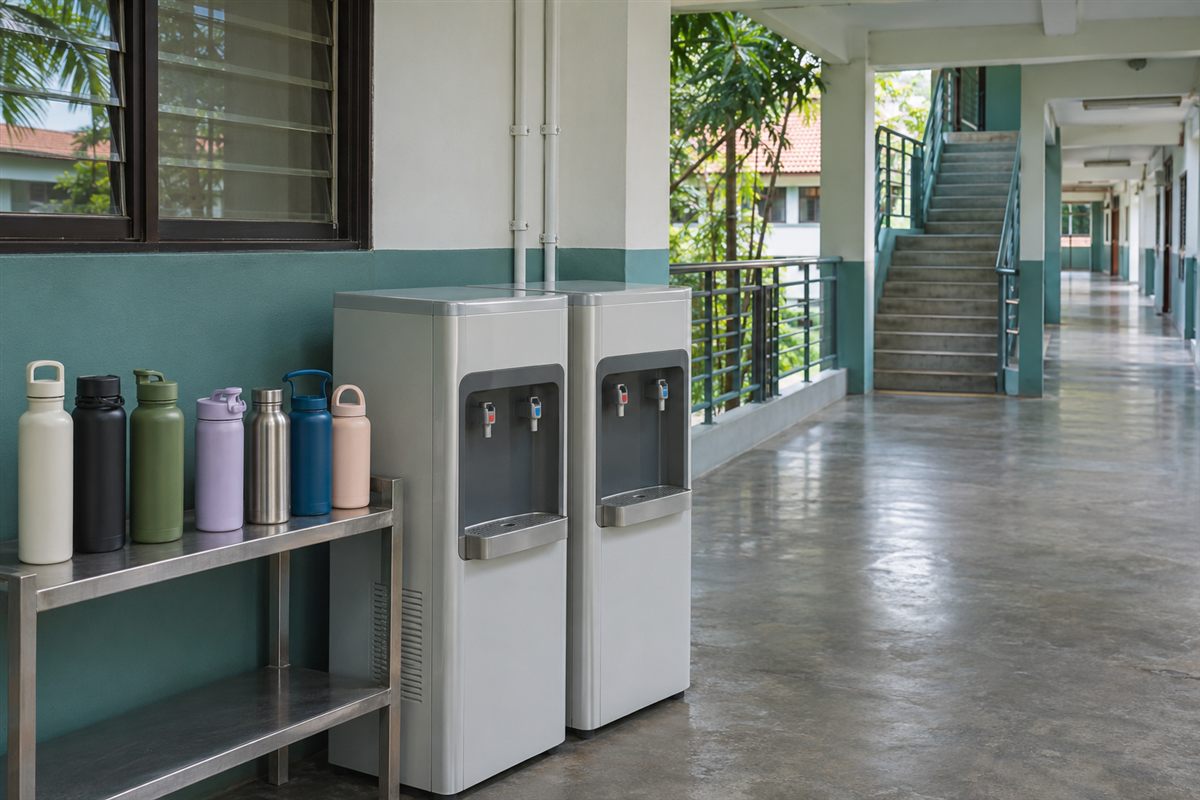
Observe the evening pattern
Record refills before classes, after dinner and before quiet hours on representative occupied days. Count users in short intervals and note the largest bottles.
Record whether students travel to another floor because a closer unit is slow, unavailable or inconvenient. Separate cold-water demand from ambient refills.
Work through a floor example
Hypothetical example: 80 residents live on a floor, and 30 refill 1 L each during a 20-minute evening peak. Demand is 30 L in that window.
With one tap delivering an assumed 1.5 L/min, pure filling takes 20 minutes before bottle changes, leaving no slack. Two taps might reduce the queue, but only if the supply and equipment can support simultaneous use.
Cooling capacity must be assessed separately.
Plan downtime and responsibility
Confirm utilities, spill response, cleaning ownership and access after office hours. More stations shorten routes but create more service points.
Compare a second location against improving a bottleneck at the existing station. Ensure residents know where to obtain drinking water when a unit is closed for maintenance.
Put it into practice
Your planning worksheet
A peak-use observation sheet and station-planning example.
| Peak-use observation | Site entry |
|---|---|
| Date and occupancy | Term period, floor and residents present |
| Five-minute interval | Users, bottle sizes and total litres |
| Queue | Longest wait, missed refills and alternative routes |
| Performance | Measured fill time, cold output and recovery evidence |
| Service coverage | Cleaner, fault contact and alternative station |
Sources & context
- US CDC — About Choosing Home Water Filters
Supports matching treatment to the water supply and specific contaminants. Dispensing calculations and worksheets are GAGE planning examples, not CDC recommendations.
Sources checked 9 November 2026. Worksheets are editorial planning tools. Confirm site-specific requirements, current local guidance and the instructions for the equipment you use.