Agree the trial with the care team
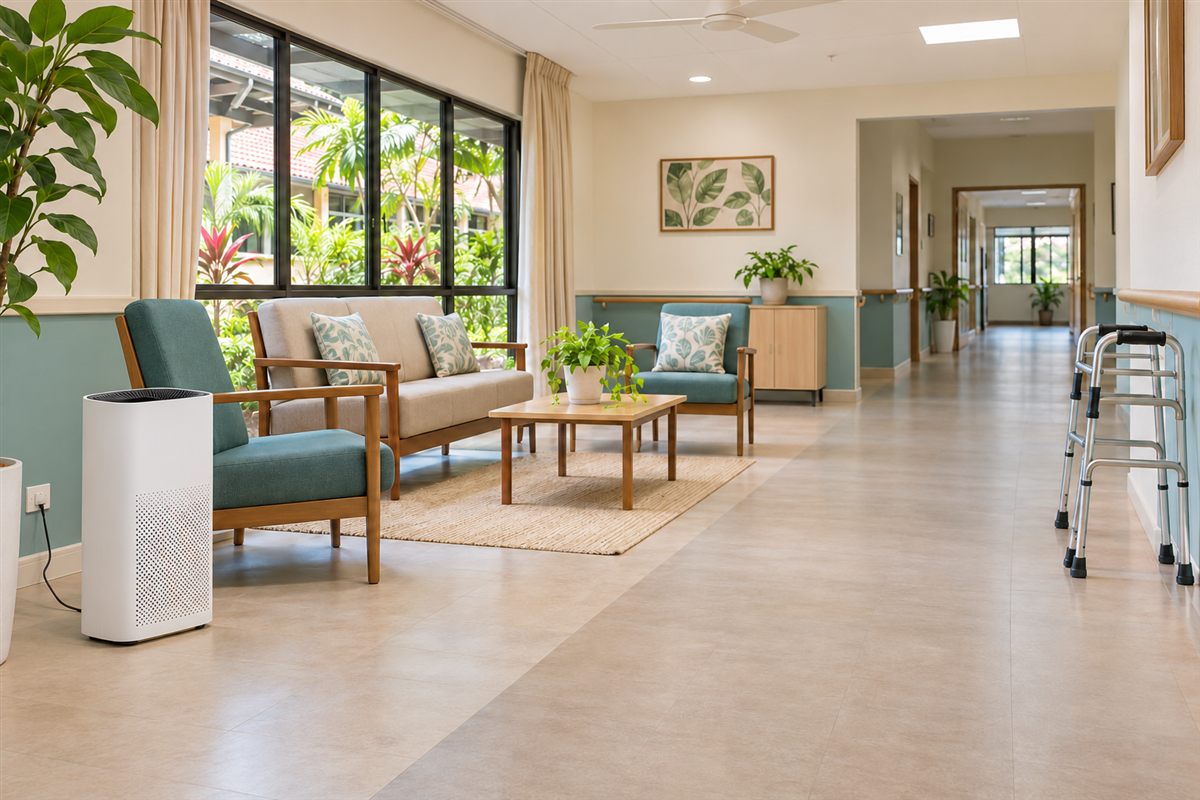
Select the room and record the resident’s preferences with appropriate consent. Identify a staff contact who can respond to discomfort during the night.
This is an operational comfort check, not a clinical experiment or evidence of health benefit. Follow the centre’s care arrangements if a resident has specific needs.
Keep the operating setting traceable
Record the exact speed or mode and available clean air delivery rate (CADR) evidence at that setting. Auto mode may vary in sound and airflow.
If staff lower the speed after a complaint, reassess the airflow assumption rather than keeping the original sizing calculation. Avoid placing an outlet where it creates an uncomfortable draught across a bed.
Check the next morning
Ask about sleep disturbance, display lights and unexpected beeps. Check that overnight furniture movements did not obstruct the intake and that the lead remains safely routed.
Record any setting changes and the reason. A satisfactory one-night observation is a starting point; repeat the check after changes to the room or equipment.
Put it into practice
Your planning worksheet
An overnight trial record covering noise, lights, clearance and operating settings.
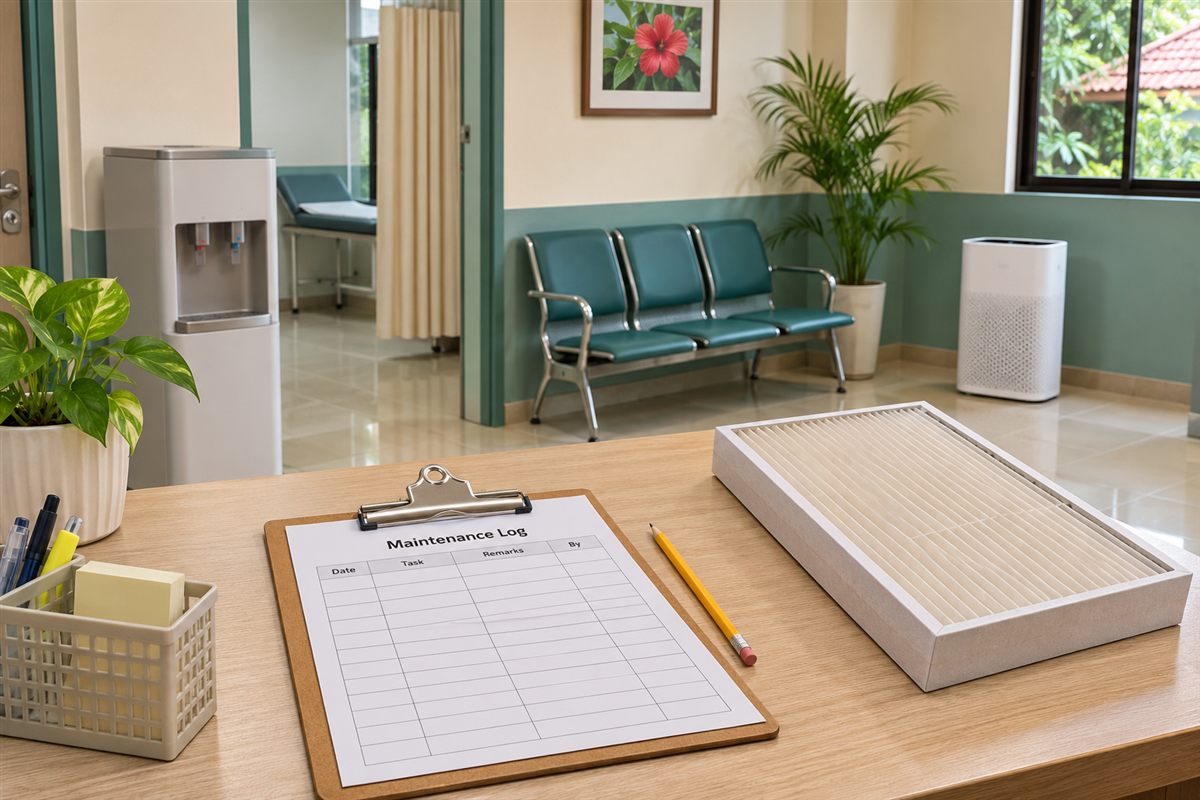
| Overnight trial record | Entry |
|---|---|
| Room, date and reviewer | Record without unnecessary resident identifiers |
| Speed / mode / CADR evidence | State setting and unknowns |
| Noise and lights | Bedside observations; automatic changes; beeps |
| Clearance and cables | Before and after the trial |
| Feedback and action | Comfort concern; revised position or setting; review date |
Sources & context
- US EPA — Guide to Air Cleaners in the Home, second edition
Supports the distinctions between particle CADR, gas filtration, operating speed and clear airflow. Residential technical principles are used here for operational planning, not as workplace or clinical compliance criteria.
Sources checked 9 November 2026. Worksheets are editorial planning tools. Confirm site-specific requirements, current local guidance and the instructions for the equipment you use.