Define the intended role
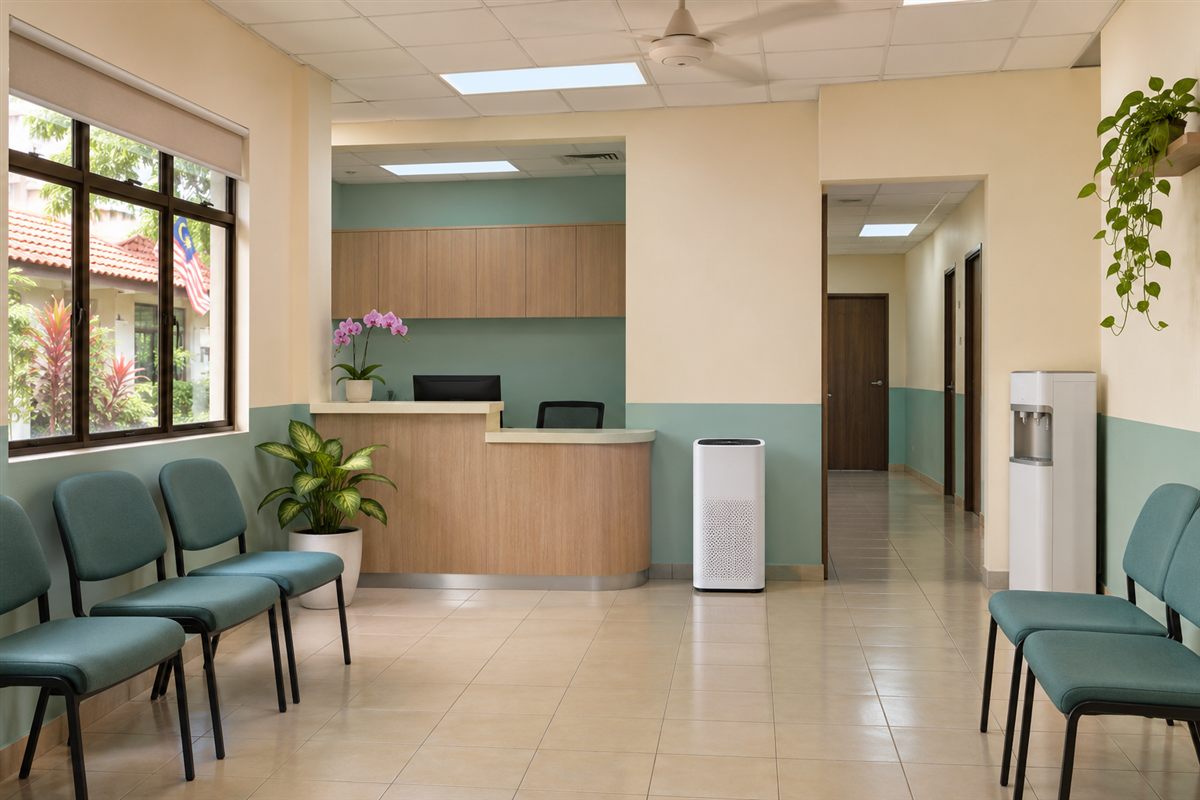
State whether the purchase is intended to supplement particle filtration in the waiting area. Record room dimensions, connected spaces, occupancy patterns and ventilation arrangements.
Do not infer a clinical risk reduction from a coverage label. Healthcare requirements and patient-specific concerns need the clinic’s own competent assessment.
Ask for evidence at a usable speed
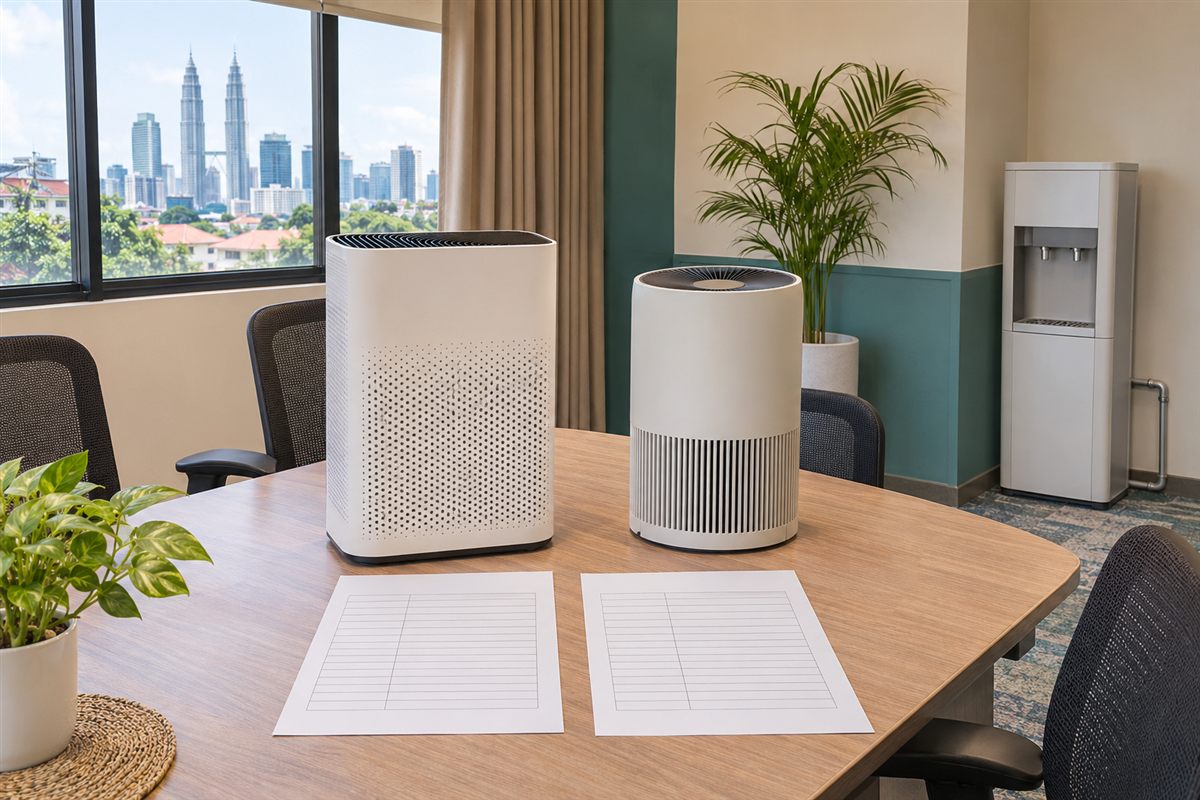
Request clean air delivery rate (CADR), the corresponding fan setting, noise information and filter specifications. Particle filtration and gas or odour reduction are different functions.
Clarify any additional treatment technologies and avoid equipment intentionally generating ozone. Compare performance in the actual room arrangement, including reception conversation and door movements.
Make service practical
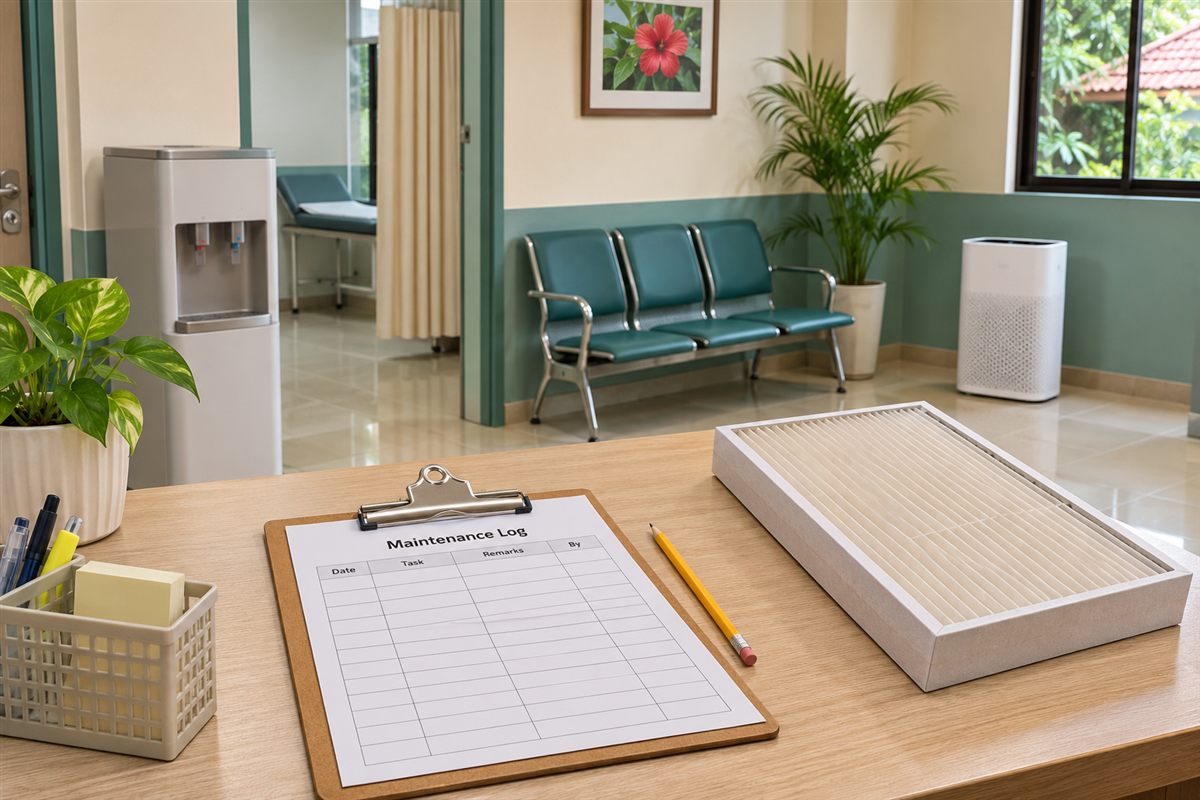
Identify where a technician can access the filter without blocking the waiting area. Follow the equipment instructions and the clinic’s approved handling procedure.
Assign a maintenance owner and an escalation route for faults. Keep the clinical team informed when the equipment is unavailable; do not present normal operation as a guarantee of a safe waiting room.
Put it into practice
Your planning worksheet
An operational purchasing checklist using verified technical guidance.
| Purchasing check | Evidence or owner |
|---|---|
| Role and review | Clinical/facilities review and intended use |
| Room and ventilation | Dimensions, connections and ventilation assessment |
| Performance | CADR and noise at chosen setting |
| Placement | Clear airflow, accessible routes and reception audibility |
| Maintenance | Filter procedure, asset record and fault escalation |
Sources & context
- US EPA — Guide to Air Cleaners in the Home, second edition
Supports the distinctions between particle CADR, gas filtration, operating speed and clear airflow. Residential technical principles are used here for operational planning, not as workplace or clinical compliance criteria.
- US EPA — Ozone Generators that are Sold as Air Cleaners
Supports avoiding intentional ozone generation in occupied spaces. This is not a clinic infection-control specification.
Sources checked 9 November 2026. Worksheets are editorial planning tools. Confirm site-specific requirements, current local guidance and the instructions for the equipment you use.