Standardise identifiers before counting stock
Give each purifier a stable ID that does not change when it moves. Record the depot, room, required filter reference and instruction-based replacement trigger.
Keep a transfer history so a unit moved between depots is neither lost nor counted twice. Avoid relying on a room name as the only identifier.
Separate stock movement from completed work
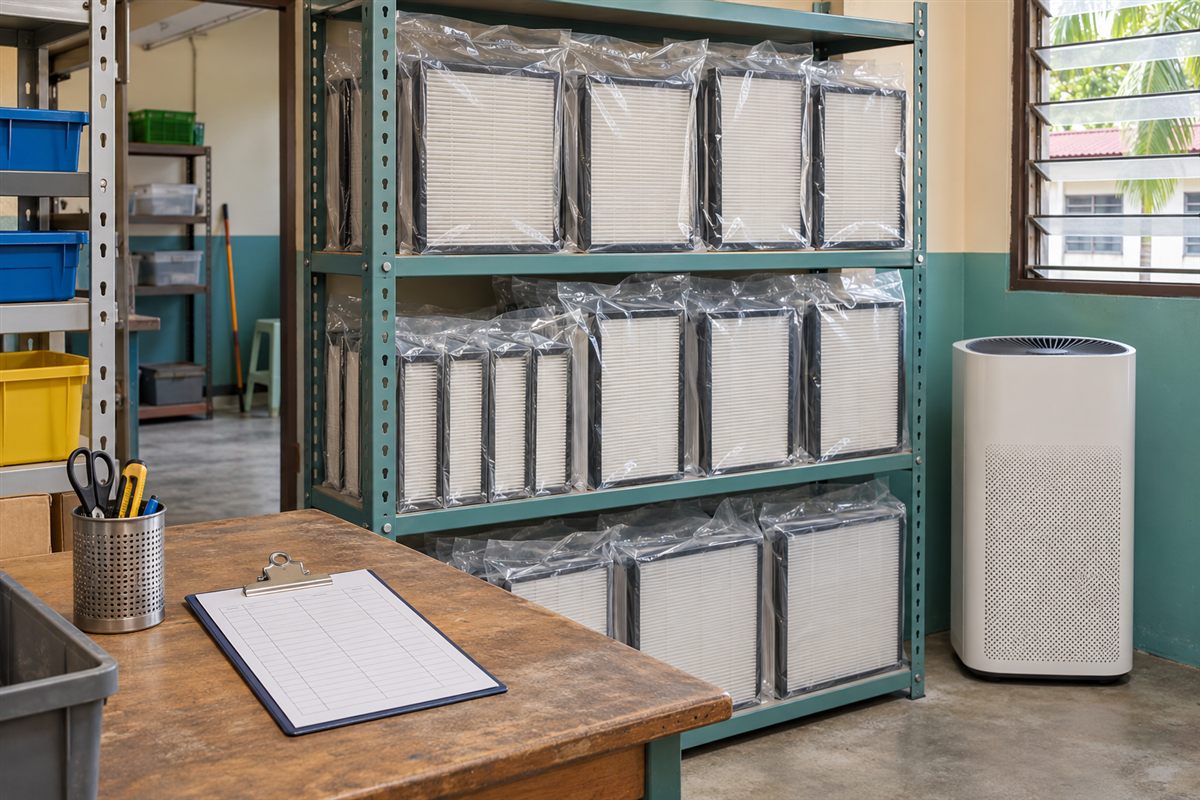
Receiving a filter does not mean it has been installed. Record receipts, issues, installation and any unused returns.
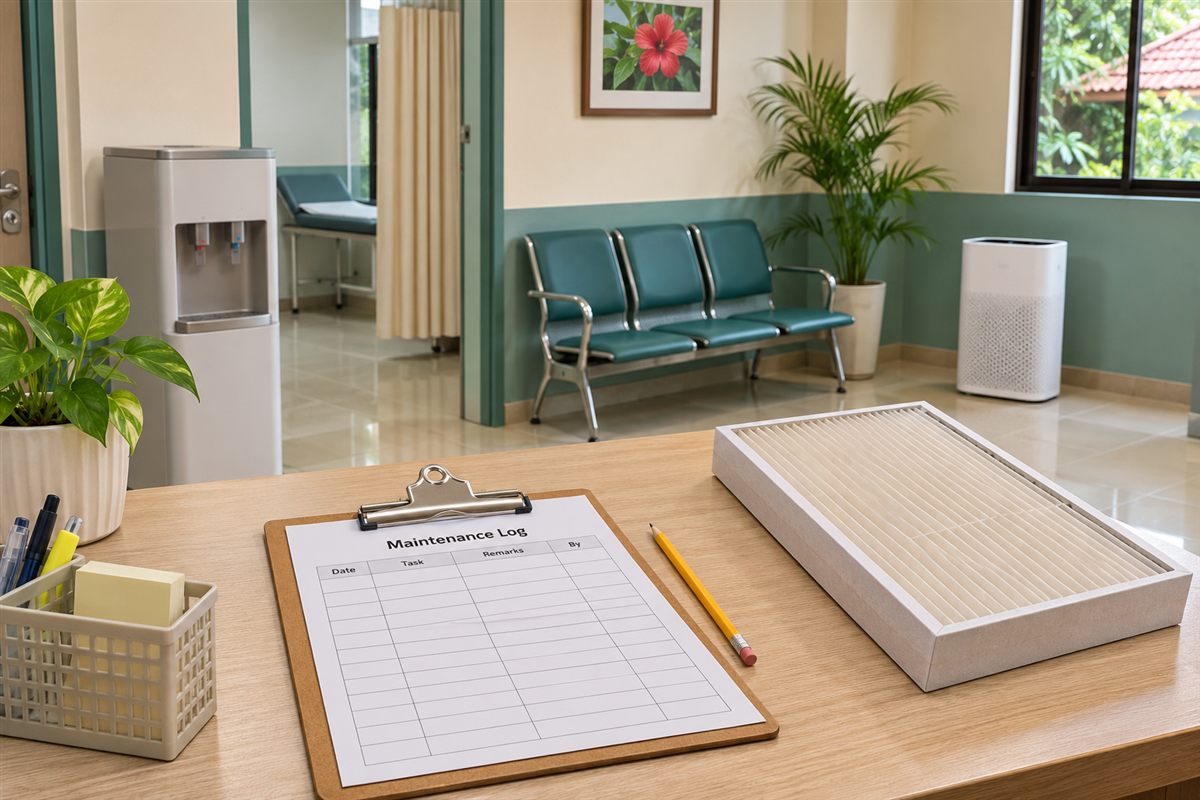
Protect filters according to their storage instructions. A service entry should show who fitted the filter, the date, the equipment check and the next review or replacement trigger.
Plan replenishment from actual lead time
Hypothetical example: two scheduled changes are due before the next delivery, with one compatible spare held for a fault response. The illustrative requirement is three filters, less usable stock already held.
Do not apply a universal spare ratio; revise the allowance from lead time, asset compatibility and the consequences of downtime. Reconcile stock and assets at the chosen review interval.
Put it into practice
Your maintenance record
A simple asset register and filter inventory workflow. On small screens, scroll the table horizontally.
| Asset ID / depot / room | Filter reference / trigger | Last action / next review | Stock link / owner |
|---|---|---|---|
| ______ / ______ / ______ | ______ / ______ | ______ / ______ | Issue no. ______ / ______ |
| ______ / ______ / ______ | ______ / ______ | ______ / ______ | Issue no. ______ / ______ |
| ______ / ______ / ______ | ______ / ______ | ______ / ______ | Issue no. ______ / ______ |
Sources & context
- US EPA — Guide to Air Cleaners in the Home, second edition
Supports the distinctions between particle CADR, gas filtration, operating speed and clear airflow. Residential technical principles are used here for operational planning, not as workplace or clinical compliance criteria.
Sources checked 9 November 2026. Worksheets are editorial planning tools. Confirm site-specific requirements, current local guidance and the instructions for the equipment you use.