Confirm the scope of the room
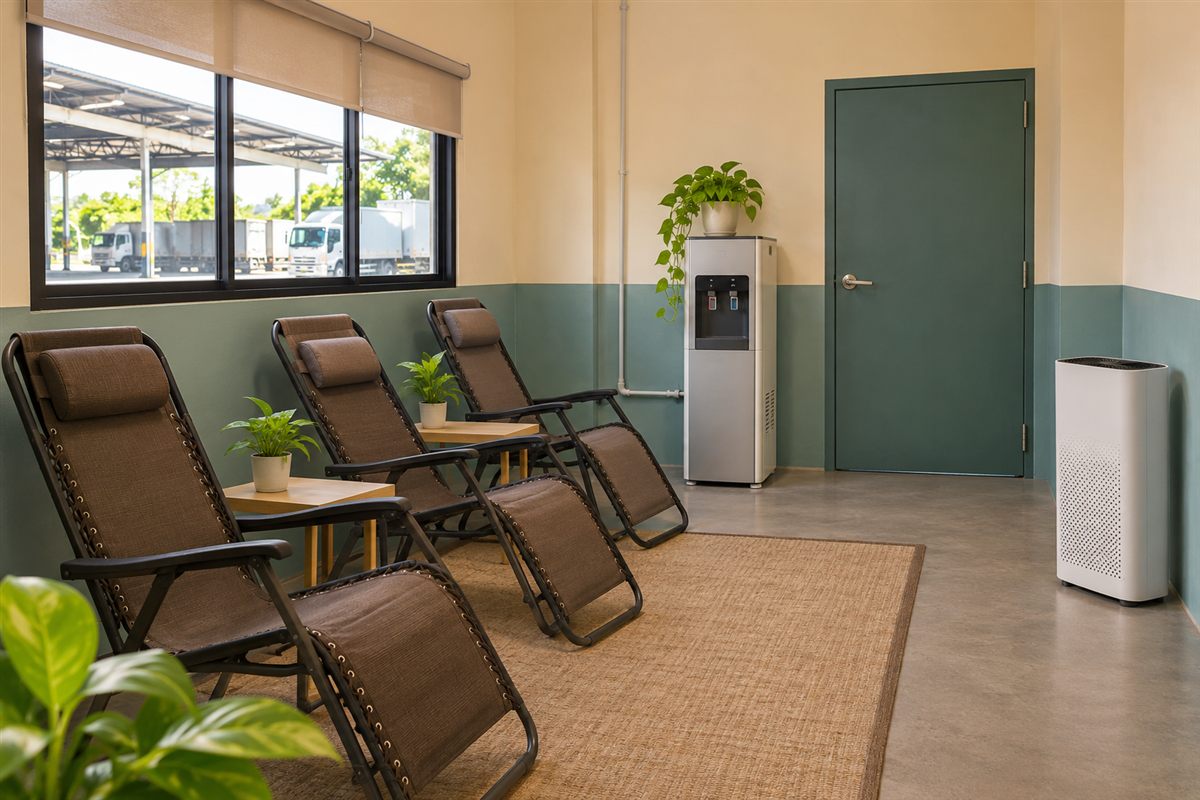
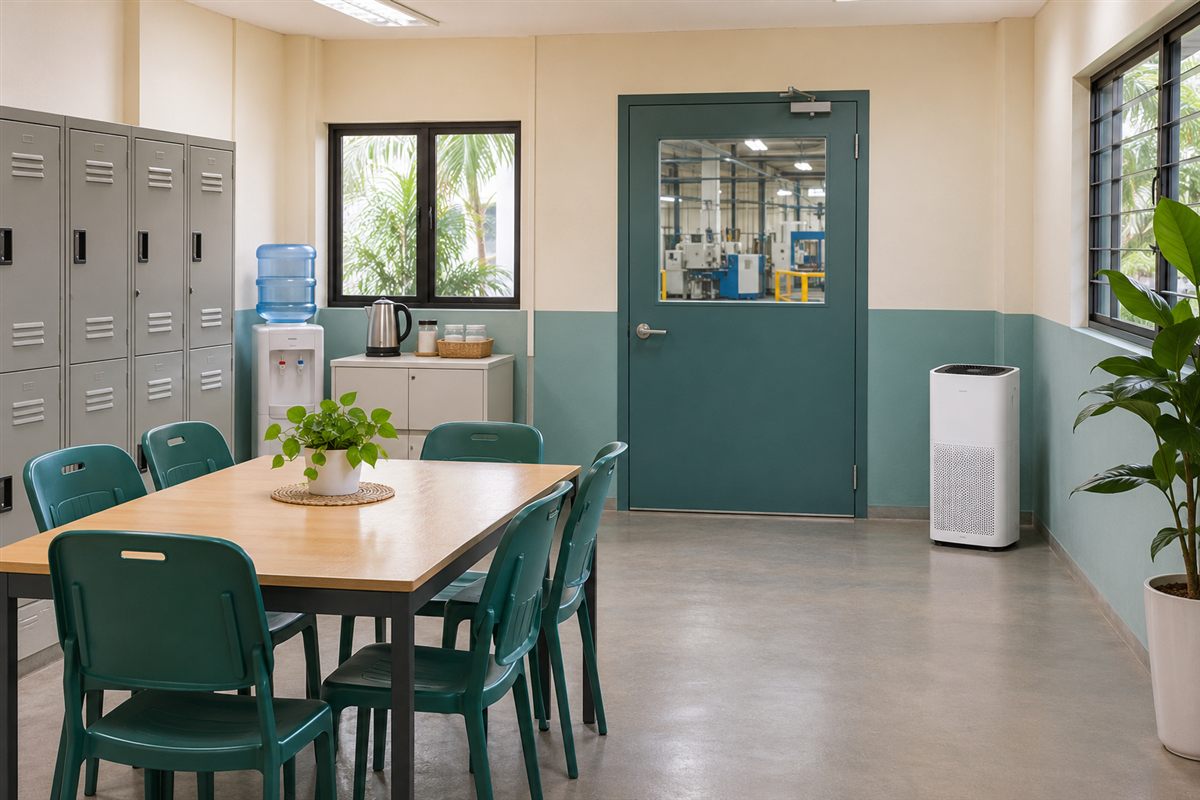
Record whether the room is physically separated from production, loading areas and vehicle exhaust. If contaminants enter from a process, escalate the source and exposure issue.
A domestic-style portable purifier must not be presented as a replacement for industrial extraction or required exposure controls. These notes apply to ordinary occupied staff rooms only.
Measure volume and normal operation
Record length, width, ceiling height, door openings and connected rooms. Note the largest shift-break group and how long they remain.
Hypothetical example: a 6 m × 5 m × 3 m room has a volume of 90 m³. At an illustrative four purifier-equivalent air changes per hour, the CADR requirement is 360 m³/h.
That assumption is for comparison, not an industrial hygiene limit.
Test the setting workers will retain
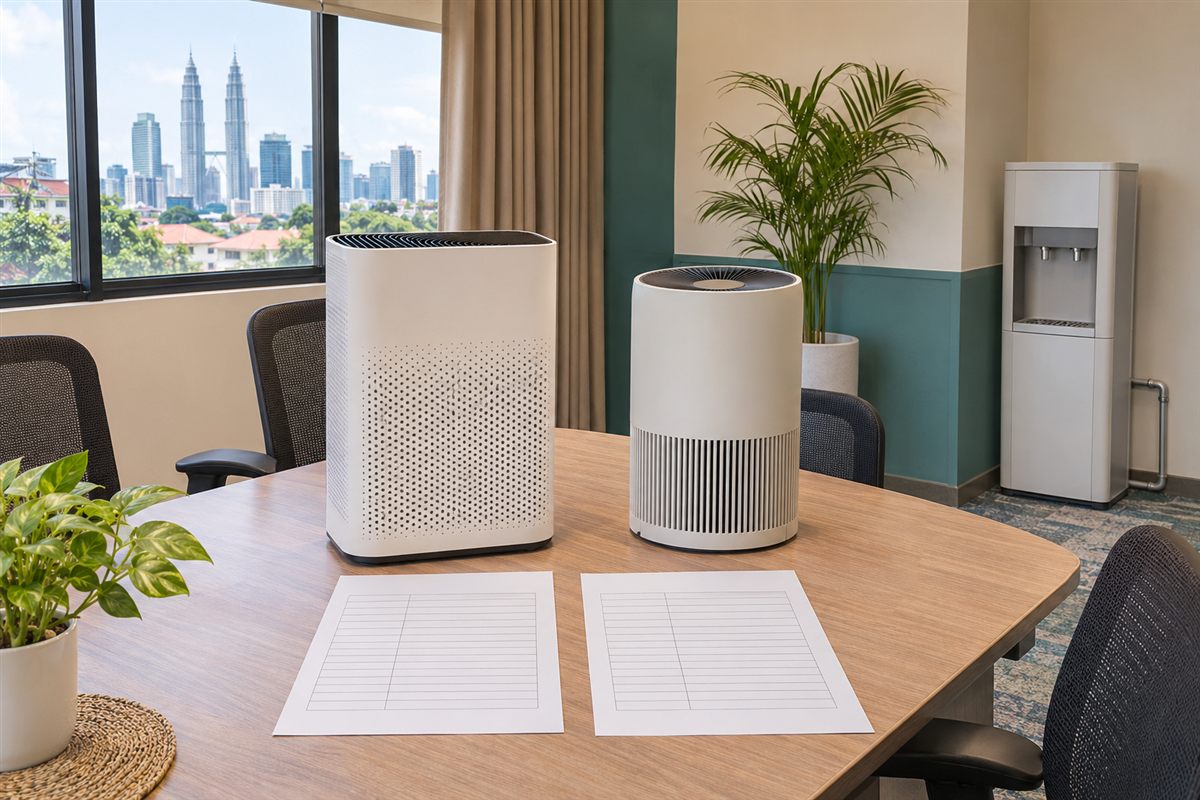
Check noise during conversation and rest, outlet direction near seats and clearance when chairs are pulled out. Ask for airflow evidence at the selected speed.
Assign the asset to facilities with a documented filter plan; a unit that staff routinely switch off because of noise will not operate as the comparison assumes.
Put it into practice
Your planning worksheet
A staff-room survey with a clear scope for ordinary occupied rooms.
| Staff-room survey | Required record |
|---|---|
| Scope | Ordinary room; process or exhaust ingress concerns escalated |
| Room | Dimensions, doors, connected areas and occupancy |
| Airflow | Target assumption, CADR and intended speed |
| Placement | Clearance, furniture movement and power route |
| Ownership | Shift contact, maintenance owner and fault process |
Sources & context
- US EPA — Guide to Air Cleaners in the Home, second edition
Supports the distinctions between particle CADR, gas filtration, operating speed and clear airflow. Residential technical principles are used here for operational planning, not as workplace or clinical compliance criteria.
- US CDC / NIOSH — How Much Ventilation Is Enough?
Explains air changes and equivalent clean-air delivery. GAGE’s four-change examples are arithmetic illustrations, not this source’s recommended target; CDC discusses aiming for five or more total clean-air changes where possible in its stated context.
Sources checked 9 November 2026. Worksheets are editorial planning tools. Confirm site-specific requirements, current local guidance and the instructions for the equipment you use.